
Facial Rash
“People often tolerate facial rashes for far too long. Many of my patients tell me they wish they had come earlier.”
Personalised Care for all ages
Get treatment for the rash on your face
Facial rashes almost always benefit from a professional diagnosis and expert care. Misunderstanding the cause, often made worse by cosmetic marketing, leads to delayed and ineffective treatment.
Whether it’s itching, redness, flaking, pimples, or general irritation, facial rashes can significantly affect confidence and daily comfort. Some appear suddenly, others develop gradually, and many come and go in frustrating cycles. Getting the right diagnosis early can make all the difference.
Common Causes of Facial Rashes
With the right diagnosis and expert care, most facial rashes can be significantly improved, or resolved entirely. Our goal is to help you feel comfortable in your skin again, restoring not just clarity but also peace of mind.
Psoriasis
Eczema (Atopic Dermatitis)
Rosacea
Acne
Allergic Reactions (Contact Dermatitis)
Infections
Autoimmune Conditions
Seborrhoeic Dermatitis
Sun Damage
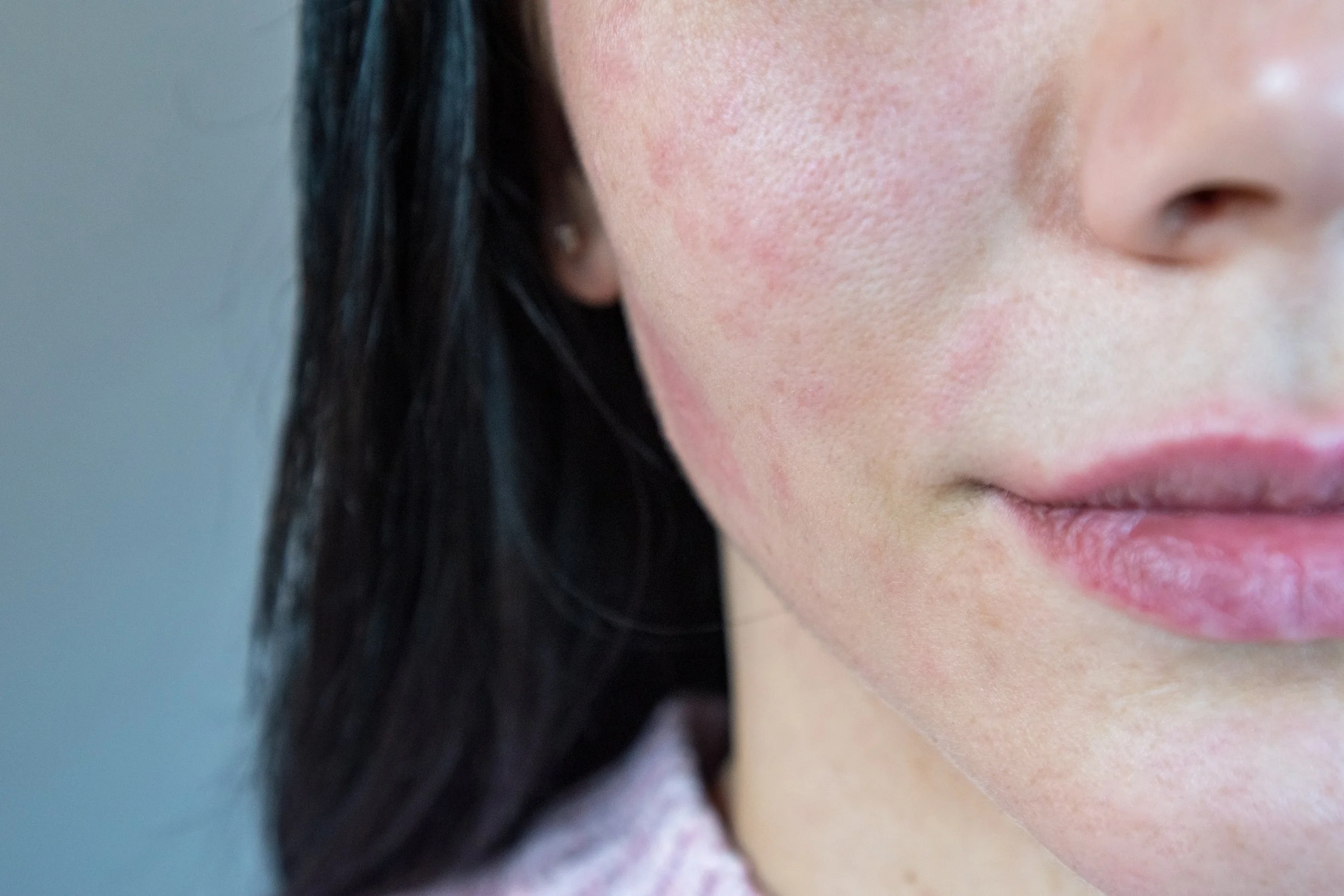
What Might Be Behind Your Facial Rash?
Facial rashes all look the same to an inexperienced eye and diagnosis by an expert is key to finding lasting relief. At our clinic, we take a careful and thorough approach to diagnosis. Some of the most frequent underlying factors include:
Sun Damage
This causes scaly red skin as well as pigment changes. There may be broken blood vessels and even skin cancers.
Rosacea
Rosacea often affects the central face, causing redness, visible blood vessels, and bumps. This chronic condition is due to stress, genetics and the weather. Symptoms include redness, itchiness, dryness and pustules. It can be treated and options include prescription creams, oral medications, and laser therapy.
Acne
Facial acne can appear as red pimples, blackheads, whiteheads, cysts and oily skin. It’s usually caused by excess oil production, bacteria, or hormonal changes and is treated with a tailored skincare routine or medications. Whilst it is entirely normal , the life long effects on self esteem can be quietly devastating , even more so if left with scars – as any adult who struggled with acne will tell you.
Allergic Reactions
Dermatitis can be caused by irritants in skincare products, soaps or sunscreens leading to red, itchy patches. Food, medications, and airborne allergens may cause contact dermatitis, facial swelling, redness, or hives.Treatment involves identifying and avoiding the trigger and using prescription creams when needed. A prompt medical diagnosis is essential to manage reactions and avoid severe complications.
Infections
Cold sores (herpes simplex) or shingles( herpes zoster) can lead to painful rashes or blisters on the face. Antiviral medications and supportive care are used to speed up healing. School sores cause red crusty patches and are due to bacteria.
Autoimmune Conditions
Diseases like lupus or dermatomyositis can present as rashes across the cheeks and nose. Managing these requires specialist diagnosis and immune-modulating medications.
Seborrhoeic Dermatitis
This condition causes flaky patches on the face, especially around the nose and eyebrows. It’s often managed with medicated shampoos or topical creams.
Eczema and psoriasis
These chronic skin conditions are often inherited and cause dry itchy red skin . They can look quite unlike eczema or psoriasis on the body. Gentle skincare and targeted medication are key to managing flare ups.
The Role of Dermatologists in Managing Facial Rashes
While general practitioners are often the first step in seeking help, dermatologists have advanced training and experience in diagnosing complex skin conditions. Seeing a dermatologist can provide clarity, relief and access to specialised options if needed.
Relief Starts with the Right Diagnosis
FAQS
-
Not many facial rashes are contagious. While conditions like cold sores and school sores can spread, most rashes like eczema, rosacea, or contact dermatitis can not.
-
Gentle soap-free and fragrance-free skincare products are best. Avoid alcohol-based cleansers, strong exfoliants, and anything that causes stinging or burning. We can guide you on the right products.
-
Yes. Adult acne is common and often triggered by hormonal changes, stress, or skincare products. We treat acne in both teens and adults.